Is Exercise Safe During Pregnancy?
Pregnancy comes with a lot of advice about what you should and shouldn’t do—and exercise is no exception. You may have heard that you shouldn’t lift weights, run, get your heart rate too high, or do certain exercises because you’re pregnant.
The good news? For most people with uncomplicated pregnancies, exercise is not only safe—it is encouraged.
The American College of Obstetricians and Gynecologists (ACOG) recommends that pregnant individuals continue or begin regular physical activity during pregnancy. Research has not shown an increased risk of miscarriage, low birth weight, or preterm birth from exercise in uncomplicated pregnancies.1
Pregnancy doesn’t mean you need to put your favorite activities on hold. Instead, think of exercise as something that can be adapted to your changing body, symptoms, and stage of pregnancy.
6 Common Myths About Exercise During Pregnancy
Myth #1: “You shouldn’t exercise during pregnancy.”
Reality: Exercise is generally safe and beneficial during pregnancy.
For most people with uncomplicated pregnancies, regular physical activity can help promote cardiovascular fitness, strength, better mood, improved sleep, healthy weight gain, and prevent injury postpartum.2 Exercise is also associated with a lower risk of several pregnancy complications, including gestational diabetes and hypertensive disorders such as gestational hypertension and preeclampsia.3,4
You don’t need to be an athlete to benefit. If you weren’t exercising before pregnancy, you can start gradually. If you are already active, you can often continue many of the activities you enjoy with appropriate modifications.
Myth #2: “You have to stop lifting weights.”
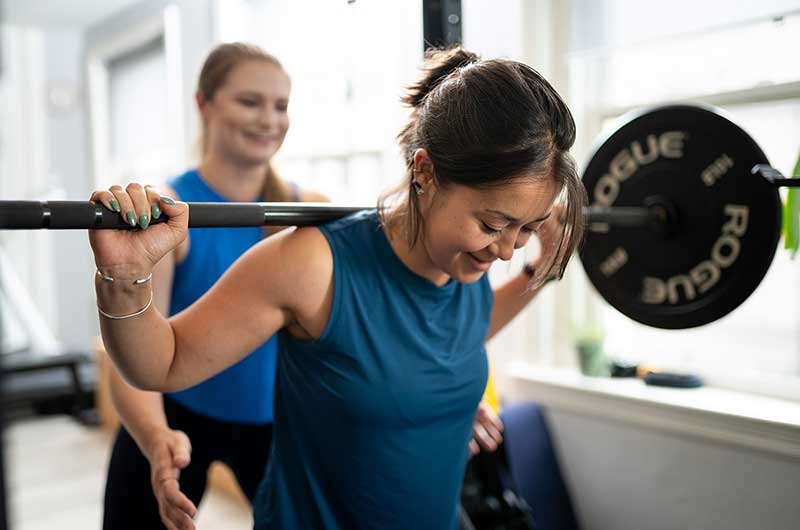
Reality: Resistance training is an important part of a healthy pregnancy exercise routine.
Strength training can help you maintain muscle strength, support your changing body, and prepare you for the physical demands of pregnancy, birth, and caring for a baby.4
Research on resistance training during pregnancy is especially encouraging. A 2025 systematic review and meta-analysis including 50 studies and more than 47,000 participants found that resistance training, either alone or as part of a larger exercise program, was associated with lower odds of gestational diabetes, macrosomia, gestational hypertension, and perinatal mood disorders.4
Myth #3: “You shouldn’t let your heart rate get too high.”
Reality: Heart rate isn’t the best way to determine exercise intensity during pregnancy.
Pregnancy naturally changes your cardiovascular system, so heart-rate responses can vary. ACOG recommends using perceived exertion or the talk test as practical ways to monitor intensity.1
For moderate-intensity exercise, you should generally feel like you’re working but still be able to carry on a conversation.
Instead of obsessing over a specific heart-rate number, pay attention to how you feel and how your body responds.
Myth #4: “If you were a runner before pregnancy, you have to stop running.”
Reality: Many runners can continue running during pregnancy.
If you were already running before pregnancy and have an uncomplicated pregnancy, you may be able to continue running as long as it remains comfortable and appropriate for you.1
You may eventually need to modify your pace, mileage, terrain, frequency, or intensity as your pregnancy progresses. Many people find a belly band can help as well when pelvic pressure starts to increase as your belly grows. You may also find that walking, incline walking, cycling, swimming, or other forms of cardio feel better at certain stages.
The goal isn’t to maintain your pre-pregnancy performance at all costs. The goal is to stay active in a way that feels good and supports your changing body.
Looking for a few favorites to make movement a little more comfortable? Check out our running and walking basics, from supportive gear to everyday workout essentials.
Myth #5: “You need to avoid core exercises.”
Reality: Your core still needs to work during pregnancy!
Your abdominal wall, diaphragm, pelvic floor, back, and hips work together to support your growing body and manage pressure.
Rather than avoiding your core, the goal is to modify how you train it.
Depending on your stage of pregnancy and symptoms, this might include:4
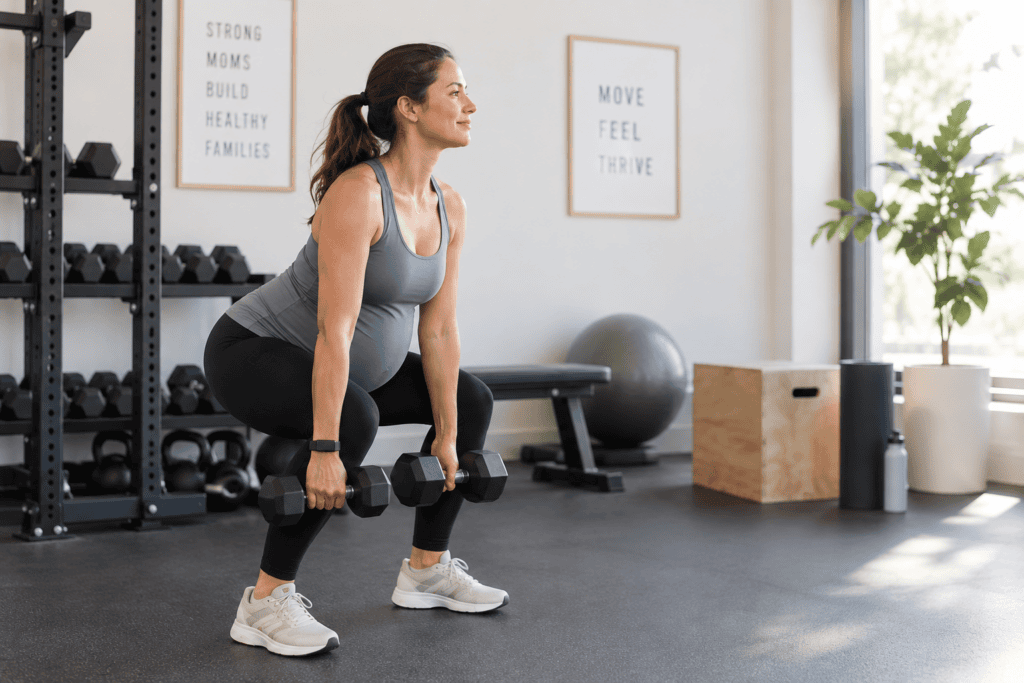
- Squats and deadlifts
- Farmer’s or suitcase carries
- Bird dogs
- Modified planks
- Side planks
- Pallof presses
- Rows and other pulling exercises
- Functional movements that coordinate your breath with movement
You may notice coning or doming of the abdominal wall with certain exercises. This doesn’t automatically mean that the exercise is harmful, but it can be a useful cue to modify the position, load, range of motion, or breathing strategy.
A pelvic health physical therapist can help you determine which modifications make sense for your individual body and goals.
Myth #6: “Exercise increases your risk of premature labor.”
Reality: In uncomplicated pregnancies, regular exercise has not been shown to increase the risk of preterm birth.
ACOG notes that concerns that exercise causes miscarriage, poor fetal growth, or premature delivery have not been substantiated in people with uncomplicated pregnancies.1
As always, pregnancy complications or medical conditions may change your exercise recommendations. Your OB or midwife can help determine whether you have any reason to modify or restrict activity.
So, How Much Exercise Should You Get During Pregnancy?
Current guidelines recommend at least 150 minutes of moderate-intensity aerobic activity per week during pregnancy.1
That could look like:
- 30 minutes, 5 days per week
- 20–30 minutes most days
- Three 10-minute walks throughout the day
- A combination of walking, running, swimming, cycling, or other aerobic activities
You don’t have to do it all at once. Some movement is better than none.
Pregnant individuals should also incorporate muscle-strengthening activities, along with aerobic exercise.1,4
If you want a game plan to staying active and reducing pain during pregnancy, check out our other blog!
What about high-intensity exercise?
If you were already participating in vigorous exercise before pregnancy, you may be able to continue. ACOG notes that healthy individuals with uncomplicated pregnancies who were regular exercisers can participate in higher-intensity activities, including jogging and aerobics, without evidence of adverse effects when appropriately managed.1
That said, pregnancy isn’t the time to ignore symptoms or push through significant discomfort. Your exercise routine should evolve as your body changes.
When Should You Stop Exercising?
Exercise should feel challenging—but it shouldn’t feel alarming.
Stop exercising and contact your OB or other pregnancy care provider if you experience warning signs such as:1
- Vaginal bleeding
- Leakage of amniotic fluid
- Regular, painful contractions
- Chest pain
- Dizziness or fainting
- Shortness of breath before exercise
- Significant headache
- Muscle weakness that affects your balance
- Calf pain or swelling
- Significant abdominal or pelvic pain
These are not symptoms to “push through.”
You should also talk with your medical provider before exercising if you have a medical or obstetric condition that may affect your ability to exercise safely.
The Bottom Line: Pregnancy Isn’t a Time to Stop Moving
There is a lot of fear surrounding exercise during pregnancy, but pregnancy itself is not a contraindication to exercise.
For most people with uncomplicated pregnancies, staying active can support physical and mental health and may reduce the risk of several pregnancy-related complications.
You don’t need to “baby” your body by avoiding movement. Instead, learn how to work with your changing body.
Maybe your squats get shallower. Maybe your running pace slows down. Maybe you swap running for incline walking. Maybe your strength workouts become shorter. Maybe you continue lifting the same weights for a while—or maybe you need to reduce the load.
All of those choices can be part of a healthy pregnancy.
How Pacer Physical Therapy Can Help
If you’re not sure how to modify your favorite activities, that’s where a pelvic health physical therapist can help. At Pacer PT, our team can assess your symptoms, strength, breathing and pressure management, pelvic floor function, and movement patterns to help you develop an exercise plan that keeps you active while adapting to your changing body.
Whether you want to keep running, lifting, strength training, or simply feel more confident moving during pregnancy, we can help you figure out what modifications make sense for your body and your goals.
Pregnancy isn’t about stopping exercise. It’s about learning how to exercise differently when your body needs you to.
Book a prenatal physical therapy evaluation with Pacer PT and let’s create a plan that works for you.
Citations
- American College of Obstetricians and Gynecologists’ Committee on Obstetric Practice. Physical activity and exercise during pregnancy and the postpartum period: ACOG Committee Opinion, Number 804. Obstet Gynecol. 2020;135(4):e178-e188. doi:10.1097/AOG.0000000000003772.
- Davenport MH, Ruchat SM, Poitras VJ, et al. Prenatal exercise (including but not limited to pelvic floor muscle training) and urinary incontinence during and following pregnancy: a systematic review and meta-analysis. Br J Sports Med. 2018;52(21):1397-1404. doi:10.1136/bjsports-2018-099780.
- Davenport MH, Ruchat SM, Poitras VJ, et al. Prenatal exercise for the prevention of gestational diabetes mellitus and hypertensive disorders of pregnancy: a systematic review and meta-analysis. Br J Sports Med. 2018;52(21):1367-1375. doi:10.1136/bjsports-2018-099355.
- Prevett C, Gingerich J, Sivak A, Davenport MH. Resistance training in pregnancy: systematic review and meta-analysis of pregnancy, delivery, fetal and pelvic floor outcomes and call to action. Br J Sports Med. 2025;59(16):1173-1182. doi:10.1136/bjsports-2024-109123.