
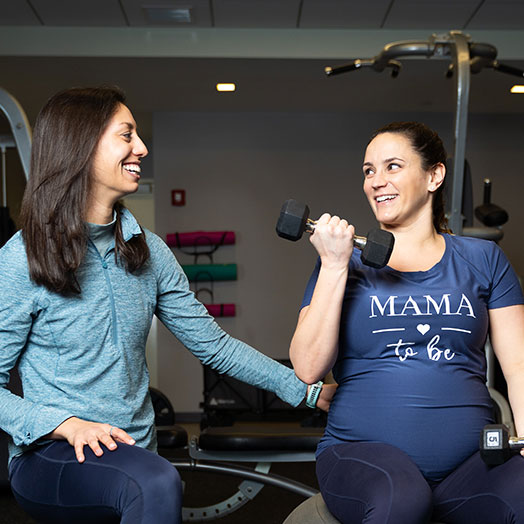
If you have endometriosis, you may already know that your symptoms can extend far beyond painful periods. Endometriosis is a chronic inflammatory condition in which endometrial-like tissue grows outside of the uterus. It affects approximately 6–10% of reproductive-age women worldwide and can cause pelvic pain, painful periods, pain with intercourse, bowel or bladder symptoms, and low back pain.1
What is less commonly discussed is how endometriosis can affect the entire body—and how physical therapy for endometriosis focuses on addressing the musculoskeletal and pain-related effects of the condition.
Endometriosis Is More Than a Pelvic Floor Condition
Endometriosis can be associated with a wide range of symptoms and coexisting conditions, meaning your pain may not be coming from your pelvic floor alone.2
Therefore, at Pacer Physical Therapy, we don’t just ask, “What’s happening with your pelvic floor?” We look at the whole body and how your symptoms may be affecting the way you breathe, move, and function.
Can Physical Therapy Help with Endometriosis?
The way we diagnose and manage endometriosis is changing. The American College of Obstetricians and Gynecologists (ACOG) now emphasizes using a patient’s symptoms, medical history, physical examination, and imaging to support a clinical diagnosis rather than relying exclusively on surgery. Surgery remains an important option for some patients, but it is not the only pathway to diagnosis or treatment.3
This makes comprehensive, multidisciplinary care, such as physical therapy, increasingly important. Endometriosis can cause inflammation and changes within the pelvis, but chronic pain can also lead to pelvic floor guarding, altered movement patterns, reduced mobility, and changes in how the nervous system processes pain.
This is where physical therapy can play an important role—without requiring surgery first.
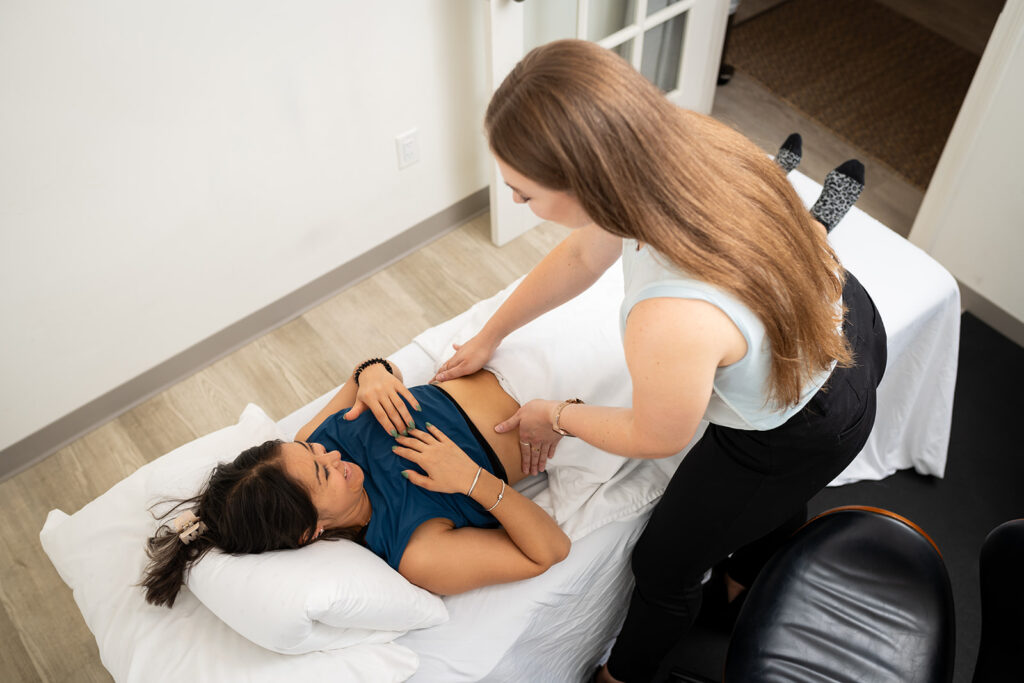
How Endometriosis Can Affect Your Whole Body
Living with chronic pain can cause your body to develop protective movement patterns. You may unconsciously brace your abdomen, tighten your pelvic floor, hold your breath, or change the way you move to avoid pain.
Over time, this can contribute to:
- Pelvic floor tension and tenderness
- Abdominal and hip muscle tension
- Low back or tailbone pain
- Thoracic spine or rib stiffness
- Neck, shoulder, or jaw tension
- Muscle weakness and altered movement patterns
Your diaphragm and pelvic floor also work together to manage pressure within your trunk. As a result, learning to breathe more effectively and allowing your pelvic floor to relax and lengthen can be an important part of treatment. Your PT may incorporate diaphragmatic breathing, rib and thoracic mobility, pelvic floor coordination, and manual therapy into your care.
What Can Pelvic Floor Physical Therapy Do for Endometriosis?
Research has found increased tension in certain pelvic floor muscles in people with deep endometriosis, including portions of the levator ani and obturator internus.4,5
Your physical therapist may assess whether your pelvic floor muscles are tense, tender, difficult to relax, or contributing to symptoms such as pain with intercourse or bowel movements.6
Treatment may include:
- Manual therapy
- Pelvic floor relaxation and down-training
- Breathing exercises
- Mobility work
- Strengthening and motor-control exercises
- Gradual return to activities that have become painful
- Pelvic wands or dilators when appropriate
However, pelvic PT isn’t simply about “releasing tight muscles.”
When pain has been present for a long time, your nervous system can become more sensitive and your muscles may continue to guard even after they have been manually released. Ultimately, that’s why strengthening, movement retraining, breathing, and gradually building confidence with movement are important parts of long-term treatment.
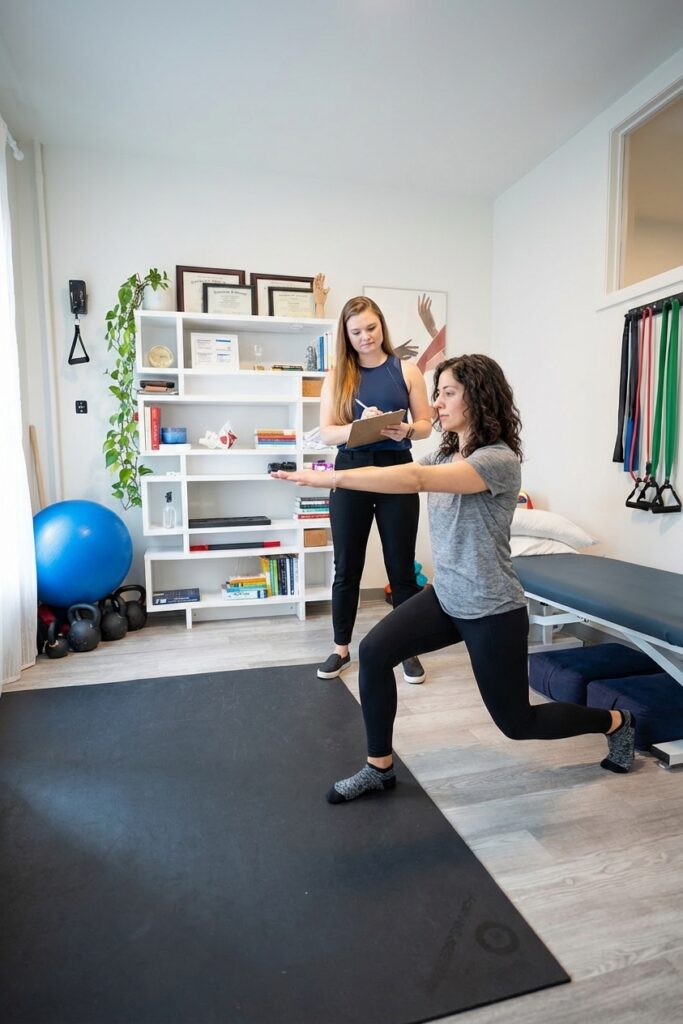
Endometriosis Can Affect Your Gut and Bladder, Too
Some people with endometriosis experience constipation, bloating, painful bowel movements, urinary symptoms, or other gastrointestinal and bladder complaints.2
Your PT can identify musculoskeletal contributors to these symptoms and determine when additional medical care may be appropriate. Treatment may include pelvic floor coordination, abdominal and pelvic muscle work, breathing and mobility exercises, and strategies for bowel and bladder function.
Because endometriosis is complex, physical therapy is one piece of a larger healthcare team. Depending on your symptoms, your care may also involve an OB/GYN, endometriosis specialist, urogynecologist, gastroenterologist, pain specialist, or other healthcare provider.
What Can You Expect From an Endometriosis PT Evaluation?
Your evaluation should be individualized to you. Your PT may ask about:
- Your menstrual cycle and symptom patterns
- Pelvic, abdominal, back, or hip pain
- Pain with intercourse
- Bowel and bladder symptoms
- Previous surgeries and medical history
- Exercise and activity levels
- Other musculoskeletal symptoms
- Stress and how it affects your symptoms
- Activities you have stopped doing because of pain
The physical therapist may then assess your posture, breathing, spinal and rib mobility, abdominal and pelvic floor muscles, strength, and movement patterns.
Tracking your symptoms throughout your menstrual cycle can also be helpful. Some people notice cyclical patterns that aren’t immediately obvious, even when they don’t experience classic severe menstrual pain.
You Don’t Have to Have Severe Period Pain to Benefit From PT
Endometriosis doesn’t look the same for everyone. For instance, some people experience severe menstrual pain, while others may primarily experience pain with intercourse, bowel or bladder symptoms, abdominal or low back pain, or more generalized musculoskeletal symptoms.
You also don’t have to wait until your pain becomes debilitating to seek help.
Pelvic Floor Physical Therapy Is One Piece of the Puzzle
Physical therapy does not remove endometriosis lesions or replace medical treatment. Instead, our goal is to help you reduce muscle guarding, improve strength and coordination, manage pain, move with greater confidence, and return to the activities that matter to you.
Endometriosis can affect much more than your pelvis. Your care should consider the whole person—not just one painful body part.
So, if you are looking for specialized physical therapy for endometriosis in Boston, Pacer Physical Therapy provides individualized pelvic health care for women experiencing pelvic pain, pelvic floor dysfunction, painful intercourse, bowel and bladder symptoms, and other musculoskeletal effects of endometriosis. If the timing feels right and you’ve been searching for support, feel free to reach out to our care team.
Citations
- As-Sanie S, Mackenzie SC, Morrison L, et al. Endometriosis: a review. JAMA. 2025;334(1):64-78. doi:10.1001/jama.2025.2975.
- Khan U, Oskotsky TT, Yilmaz BD, et al. Comorbidity analysis and clustering of endometriosis patients using electronic health records. Cell Rep Med. 2025;6(8):102245. doi:10.1016/j.xcrm.2025.102245.
- American College of Obstetricians and Gynecologists. Diagnosis of endometriosis. Clinical Practice Guideline. Published March 2026. Accessed August 26, 2026. ACOG Clinical Practice Guideline
- Moreira da Cunha R, Oliveira Veloso M, Coutinho SS, et al. Sexual function in women with endometriosis and pelvic floor myofascial pain syndrome. Rev Bras Ginecol Obstet. 2024;46:e-rbgo40. doi:10.61622/rbgo/2024rbgo40.
- Muallem J, Velho RV, Netzl J, Sehouli J, Mechsner S. Pelvic floor hypertension: possible factors for pelvic floor tenderness in endometriosis patients—a pilot study. Arch Gynecol Obstet. 2023;308(6):1803-1809. doi:10.1007/s00404-023-07192-5.
- Mena-González A, Leirós-Rodríguez R, Hernández-Lucas P. Effectiveness of physical therapy techniques and methods in the management of endometriosis symptoms: a systematic review with meta-analysis.