If you’ve had a C-section, you may notice C-section scar tightness, numbness, sensitivity, or tingling around your incision in the weeks and months after delivery. C-section scar tightness may show up as a pulling sensation when you stand up straight, discomfort when you stretch, or a patch of skin that feels different from the rest of your abdomen.
These sensations can be surprising, especially when your incision looks like it has healed on the outside. But healing after a C-section involves more than the skin closing. Several layers of tissue have been affected, and your nerves, muscles, and connective tissue need time to recover, too.
The good news? Gentle movement, gradual return to everyday activities, and scar care at the appropriate stage of healing can help you regain comfort and confidence in how you move.
Why Does My C-Section Scar Feel Tight or Pull?
During a C-section, your surgeon makes an incision through the skin and underlying tissues to deliver your baby. As these tissues heal, your body produces collagen to repair the area. This process creates scar tissue, which may initially be less flexible than the surrounding tissue.
C-section scar tightness or pulling can happen because of several factors:1
- Healing connective tissue: The layers beneath your incision are repairing and reorganizing. These tissues may feel stiff or restricted as healing progresses.
- Changes in how your abdomen moves: Your abdominal wall has been through pregnancy, surgery, and postpartum recovery. You may notice tightness when standing upright, reaching overhead, rolling in bed, or extending your trunk.
- Protective muscle tension: If movement feels uncomfortable, you may unconsciously brace your abdominal muscles or limit how much you move. Over time, this can contribute to stiffness and discomfort.
- Sensitivity around the incision: The area may be tender or feel like it is pulling as you return to activities that stretch or load your abdominal wall.
C-section scar tightness does not automatically mean that something is wrong or that the scar is permanently restricting your movement. However, persistent pain, worsening symptoms, or significant limitations deserve an assessment.
Why Is My C-Section Scar Numb, Tingly, or Sensitive?
Numbness and tingling are also common sensations after abdominal surgery. Small sensory nerves in the skin and underlying tissues can be stretched, irritated, or affected during the procedure.
As these nerves recover, you may experience:
- Numbness directly over or below the incision
- Tingling, prickling, or pins-and-needles sensations
- Increased sensitivity to clothing or light touch
- A strange pulling or burning sensation around the scar
- Areas that feel different when you touch them
Nerve recovery varies from person to person. Some changes in sensation improve over time, while a small area of numbness may persist.
You do not need to forcefully massage a numb area to make sensation return. Instead, once the incision is fully closed and your healthcare provider says it is safe, gentle touch and gradual exposure to different textures may help you become more comfortable with the area.
If numbness is spreading, symptoms are worsening, or you develop new weakness or severe pain, contact your healthcare provider.
Gentle Movement After a C-Section: Where to Start
You do not have to wait until your scar feels completely normal to begin gentle movement. Early mobility can be part of recovery, as long as you follow your discharge instructions and your medical team’s guidance.
In the early days after surgery, the goal is not to stretch or mobilize the scar. It is to help you move comfortably, breathe normally, and gradually resume everyday activities without placing unnecessary strain on your incision.2,4
1. Start with gentle breathing
Lie on your side or recline comfortably. Inhale through your nose, allowing your lower ribs and abdomen to expand naturally, then exhale slowly without forcefully tightening your core. Repeat for 5–10 breaths.
2. Make getting in and out of bed easier
Use a log-roll technique: bend your knees, roll onto your side with your shoulders and hips moving together, then push up with your arms as you bring your legs off the bed. Move slowly and exhale with effort. Holding a pillow against your abdomen may also provide comfort when coughing or changing positions.
3. Take short, comfortable walks
Start with brief walks around your home and gradually increase as your comfort and energy allow. Take breaks as needed, and reduce activity if pain or pulling increases during the walk or afterward. There is no specific step goal you need to meet.
4. Gradually reintroduce gentle movement
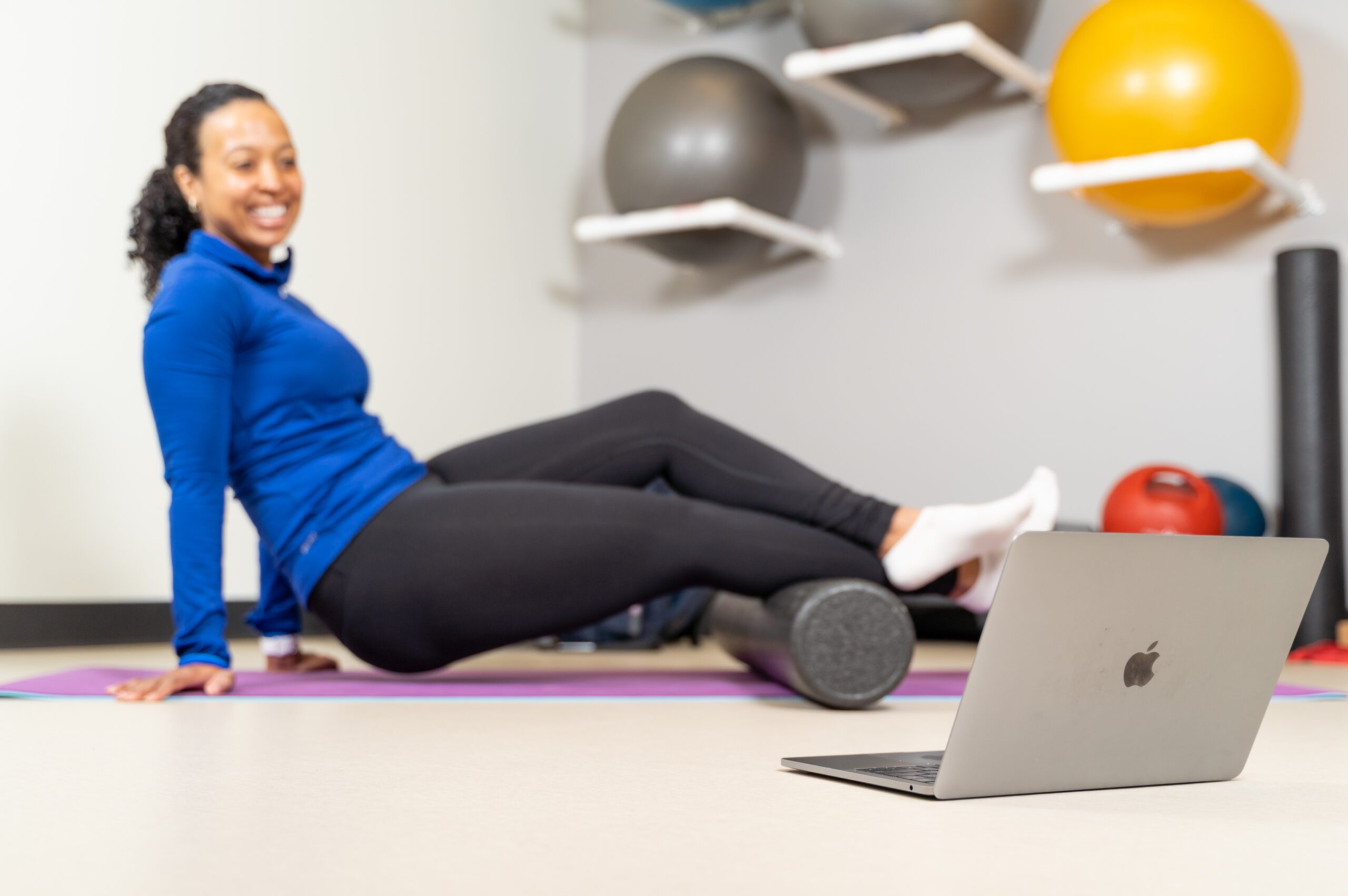
As you feel more comfortable, practice standing upright, reaching, and changing positions. Gentle pelvic tilts or small trunk movements may be appropriate if they feel comfortable. Avoid aggressive stretching, and follow your healthcare provider’s guidance on lifting and returning to exercise. If a demonstration is helpful, check out this video that walks through breathing mechanics, getting in and out of bed, transfers, and steps!
When Can I Start C-section Scar Massage?
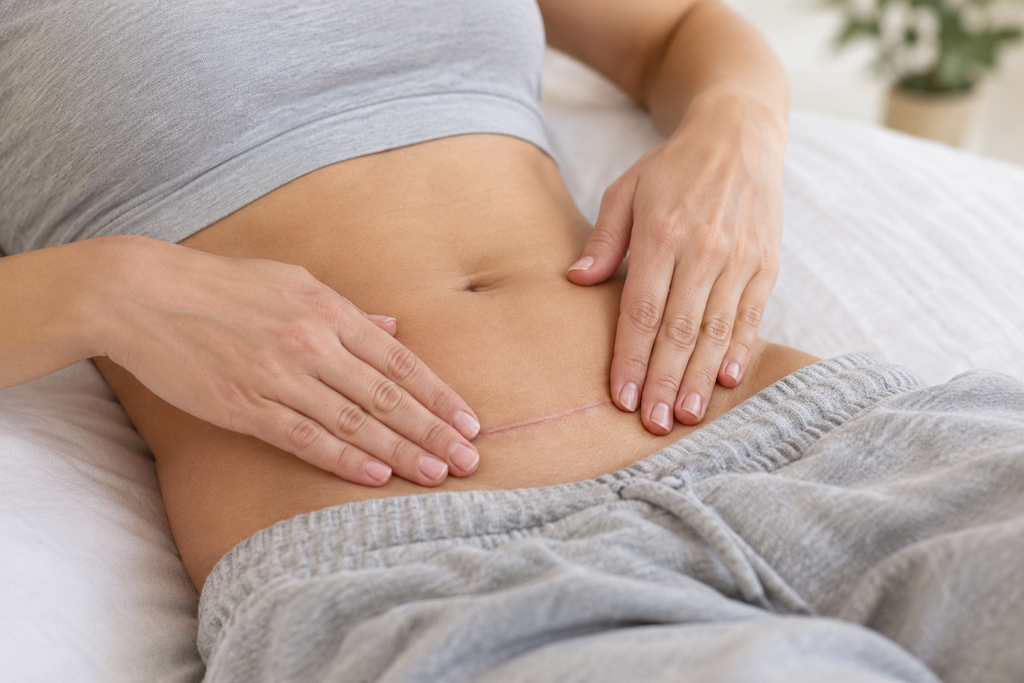
Scar massage may help improve comfort, sensitivity, and the way the scar moves relative to surrounding tissues. However, scar massage should only begin once the incision is fully closed and healed, without open areas, scabs, drainage, or signs of infection, and your healthcare provider has cleared you to begin.1,2
This is different from early mobility. In the first days and weeks, you can work on comfortable breathing, walking, and everyday movement without directly massaging the incision.
Once you have been cleared, start gently.
How to begin gentle scar care
- Wash your hands and get comfortable in a supported position.
- Begin by placing your fingertips on the skin around the scar, rather than pressing directly into it.
- Use light, comfortable touch or small circles around the area.
- As the tissue becomes more comfortable, you can gradually explore gentle skin movement in different directions, including above and below the scar.
- Keep the pressure light enough that you can breathe normally and relax your abdominal muscles.
Start with a short session and see how your body responds. The goal is to improve comfort and familiarity with the area, not to force the tissue to move.
You should not feel sharp pain, significant burning, or increased symptoms that persist after you finish. Stop if the area becomes irritated or symptoms worsen.
There is no need to dig into the scar, aggressively pinch the tissue, or try to break up adhesions. If you are unsure whether your incision has healed enough, check with your healthcare provider first.
C-Section Scar Still Tight Months or Years Later?
It is possible to experience scar sensitivity, numbness, pulling, or discomfort long after your incision has closed. A healed scar can still be sensitive, and the tissues around it may feel less mobile than you would like.
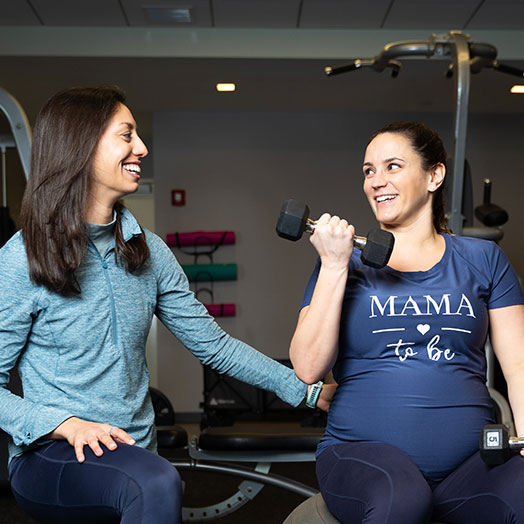
If symptoms are affecting exercise, lifting, stretching, intimacy, or daily activities, a pelvic health physical therapist can assess how your scar, abdominal wall, breathing, and movement patterns may be contributing.
Depending on your needs and stage of healing, treatment may include:
- Education about tissue healing and gradual activity progression
- Gentle scar desensitization and mobility techniques, when appropriate
- Abdominal wall and trunk strengthening
- Breathing and pressure-management strategies
- Gradual return to lifting, running, and other recreational activities
- Strategies to reduce protective muscle tension and improve movement confidence
You do not need to wait until your symptoms become severe to ask for help. And while scar mobility can be one part of treatment, not every postpartum symptom is caused by the scar itself.
When to Call Your Doctor About Your C-Section Scar
Some tightness or altered sensation can occur during recovery, but certain symptoms should not be treated with massage or exercise alone.
Contact your healthcare provider promptly if you notice increasing redness, warmth, swelling, worsening pain, drainage, a wound that is opening, or fever. Seek urgent medical care for severe or rapidly worsening abdominal pain, heavy bleeding, chest pain, difficulty breathing, or one-sided calf pain or swelling.3,4
A new or enlarging bulge near the incision, particularly if it is painful, should also be assessed.
You Deserve to Feel Comfortable in Your Body After a C-section
Your recovery does not end when the incision closes. The skin, nerves, abdominal wall, and deeper tissues all need time to heal and adapt, and it is normal for the area to feel different as you return to movement.
Start with comfortable breathing, gentle transitions, and short walks. Progress gradually, and wait until the incision is fully healed and you have appropriate clearance before beginning direct scar massage.
You do not need to push through pain or aggressively massage your scar to heal well. If tightness, numbness, or sensitivity continues to interfere with your life, pelvic floor physical therapy can help you understand what may be contributing and build a plan that fits your recovery.
At Pacer Physical Therapy in Boston, our team helps postpartum patients feel comfortable and confident in their bodies again, whether that means easing scar tightness and sensitivity, rebuilding core strength, or returning to lifting and running. You don’t have to wait until symptoms are severe to ask for help.
Schedule a free consultation to talk with one of our physical therapists about your recovery.
Citations
- Gilbert I, Gaudreault N, Gaboury I. Exploring the effects of standardized soft tissue mobilization on the viscoelastic properties, pressure pain thresholds, and tactile pressure thresholds of the cesarean section scar. J Integr Complement Med. 2022;28(4). doi: 10.1089/jicm.2021.0178
- Boston Medical Center. Healing after C-section. Bump & Beyond. Accessed October 27, 2026. https://www.bmc.org/bump-beyond/postpartum-experience/physical-health/healing-after-c-section?page=2
- American College of Obstetricians and Gynecologists. Cesarean birth. Accessed October 27, 2026. https://www.acog.org/womens-health/faqs/cesarean-birth
- National Health Service. Caesarean section—recovery. Accessed October 27, 2026. https://www.nhs.uk/tests-and-treatments/caesarean-section/recovery/