
Have you ever experienced interstitial cystitis symptoms like burning with urination, urinary urgency, or the constant feeling that you need to use the bathroom, only to have your urine test come back negative for a urinary tract infection (UTI)?
You are not imagining your symptoms.
While a UTI is one possible cause of urinary discomfort, similar symptoms can occur without an active bacterial infection. One condition that may cause ongoing bladder and pelvic symptoms is interstitial cystitis/bladder pain syndrome (IC/BPS).1,2
And importantly, the pelvic floor can play a significant role in how these interstitial cystitis symptoms feel and persist.3 Therefore, understanding how the bladder and pelvic floor work together can help you explore treatment options, including pelvic floor physical therapy.
What is Interstitial Cystitis?1
Interstitial cystitis (IC), also called bladder pain syndrome, is a chronic condition characterized by bladder or pelvic pain, pressure, or discomfort, often accompanied by urinary urgency and frequency. Symptoms can vary person to person and may flare up, improve, and return over time.
Common symptoms may include:
- Urinary urgency—the sudden or persistent feeling that you need to urinate
- Urinary frequency or needing to urinate more often than usual
- Bladder, pelvic, or lower abdominal pain or pressure
- Pain that increases as the bladder fills and temporarily improves after urinating
- Pain with sexual activity
- A sensation of needing to urinate even when the bladder isn’t very full
Some people describe their symptoms as feeling almost identical to UTI. However, unlike a typical bacterial UTI, IC/BPS is not caused by an active bacterial infection.
Why Do I Feel Like I Have a UTI When My Test Is Negative?
This is one of the most frustrating aspects of persistent bladder symptoms.
A UTI is caused by an infection, typically involving bacteria that can be identified through appropriate urine testing. Interstitial cystitis is different: there is no single test that confirms the condition. Instead, healthcare providers generally consider your symptoms, medical history, and examination findings to rule out other conditions that could be causing them.3
This means that persistent urinary symptoms deserve attention even when your urine culture is negative.
It is important not to assume that every negative UTI test means you have IC, though. Other conditions such as overactive bladder, pelvic floor dysfunction, gynecologic conditions and certain musculoskeletal or gastrointestinal issues, can cause overlapping symptoms. Your physician, urologist, or urogynecologist can help determine what may be contributing to your symptoms.
How Does the Pelvic Floor Affect Interstitial Cystitis Symptoms?
Your pelvic floor is a group of muscles at the bottom of your pelvis that helps support the bladder and other pelvic organs and plays an important role in bladder and bowel function.
Ideally, these muscles need to be able to contract and relax at the appropriate times.
When the pelvic floor becomes overactive or stays tense, it may contribute to pelvic pain, urinary urgency, frequency, and difficulty relaxing during urination. People with IC/BPS may also have tenderness or increased tension in the pelvic floor muscles.2
This can sometimes create a cycle:
Bladder symptoms → pelvic floor guarding/tension → increased sensitivity → more bladder/pelvic symptoms
Pain can cause the pelvic floor to tighten protectively, and over time that increased muscle tension may become part of the pain experience.
This is one reason why treating the bladder alone may not address every symptom.
Does this mean I need to do more Kegels?
Not necessarily—and this is an important distinction.
Kegels are exercises designed to strengthen the pelvic floor. They can be very helpful for certain conditions, such as some types of urinary leakage.
But if your pelvic floor is already tense, tender, or having difficulty relaxing, doing more strengthening may not be what you need.2,4
For people with IC/BPS and pelvic floor tenderness, guidelines support pelvic floor physical therapy focused on techniques that address muscle tenderness, trigger points, and restricted or painful tissues.1,2 The American Urological Association specifically recommends avoiding pelvic floor strengthening when it aggravates IC/BPS symptoms. 1
Your pelvic floor doesn’t just need to be strong—it needs to be able to relax.
How Can Pelvic Floor Physical Therapy Help Interstitial Cystitis Symptoms 1,4
At Pacer Physical Therapy, we take an individualized approach based on your symptoms and examination.
Depending on your presentation, treatment may include:
1. Pelvic floor relaxation and coordination
We can teach you how to recognize when you’re unintentionally holding tension in your pelvic floor and practice letting those muscles relax.
This may include:
- Diaphragmatic/360° breathing
- Pelvic floor lengthening
- Relaxation techniques
- Coordination of breathing with pelvic floor movement
2. Manual therapy
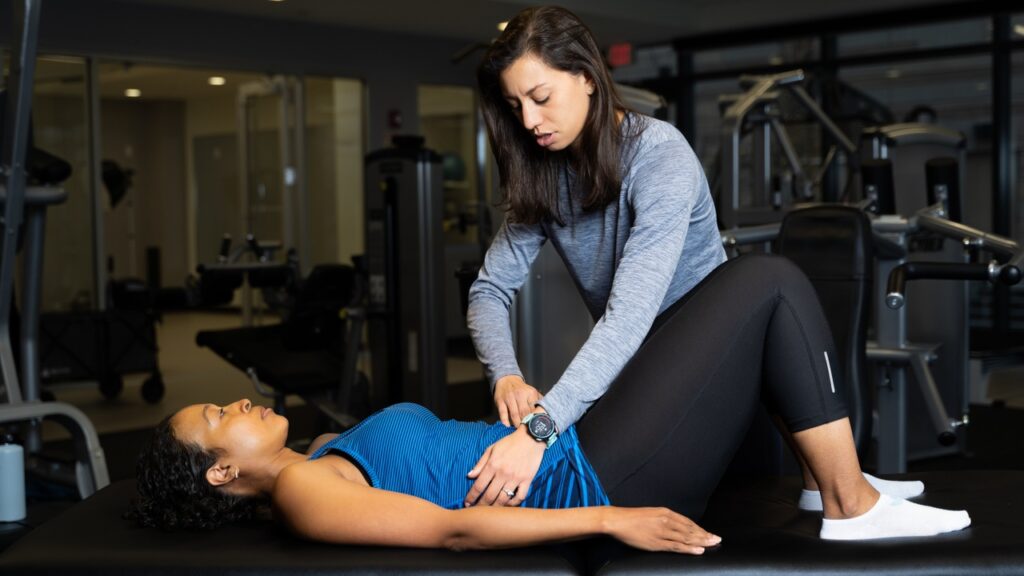
When appropriate, your physical therapist may use hands-on techniques to address areas of muscle tension and tenderness in the:
- Pelvic floor
- Hips
- Glutes
- Lower abdomen
- Inner thighs
- Low back
The goal isn’t simply to “release a tight muscle.” We’re looking at how the muscles, nerves, joints, and surrounding tissues may be contributing to your symptoms.
3. Bladder and behavioral strategies
We can help you identify patterns that may be contributing to urgency and frequency and develop strategies to better manage your symptoms.
A bladder diary can also be useful for identifying patterns between fluid intake, urination, urgency, pain, and potential triggers.
4. Breathing and nervous system regulation
Bladder and pelvic pain can be influenced by the nervous system. When you’re experiencing pain or stress, your body may naturally respond by increasing muscle tension.
Learning strategies such as slow, diaphragmatic breathing and relaxation can help decrease unnecessary tension and give your nervous system another way to respond to symptoms.
5. Movement and exercise
Having interstitial cystitis does not mean you have to stop exercising.
Some people notice that certain activities aggravate their symptoms, while others find gentle movement such as walking or stretching helpful. Your physical therapist can help you modify activity based on your symptoms and gradually build back toward the activities you enjoy.
When Should You See a Healthcare Provider for Bladder Symptoms?
If you are experiencing new urinary symptoms, don’t assume they are IC.
Symptoms such as burning with urination, urgency, frequency, pelvic pain, or blood in the urine should be evaluated by an appropriate healthcare professional. Urine testing may be needed to determine whether an infection is present and to rule out other conditions.
If your UTI tests repeatedly come back negative but your symptoms continue, consider talking with your physician, urologist, or urogynecologist about other possible causes—including IC/BPS and pelvic floor dysfunction.
Find Support for Interstitial Cystitis and Pelvic Floor Symptoms
Persistent bladder symptoms can be frustrating, especially when you feel like you’ve tried everything and don’t have a clear explanation for what’s happening.
If you have IC/BPS or ongoing bladder and pelvic symptoms, treatment doesn’t have to focus solely on the bladder.
Your bladder, pelvic floor, nervous system, breathing, muscles, and daily habits all interact—and pelvic floor physical therapy can be one part of a comprehensive treatment plan.
At Pacer Physical Therapy, we can help you better understand your symptoms, identify contributing factors, and develop an individualized plan to help you feel more comfortable and confident in your body.
If you’re experiencing persistent bladder or pelvic symptoms, reach out to learn whether pelvic health physical therapy may be appropriate for you.
Citations
- Clemens JQ, Erickson DR, Varela NP, et al. Diagnosis and treatment of interstitial cystitis/bladder pain syndrome: AUA guideline amendment. J Urol. 2022.
- Lim J, et al. Painful bladder syndrome/interstitial cystitis and high tone pelvic floor dysfunction. Obstet Gynecol Clin North Am. 2021.
- Park JJ, Kim KT, Lee EJ, et al. Current updates relating to treatment for interstitial cystitis/bladder pain syndrome: systematic review and network meta-analysis. BMC Urol. 2024;24:95.
- van Reijn-Baggen DA, Han-Geurts IJM, Voorham-van der Zalm PJ, et al. Pelvic floor physical therapy for pelvic floor hypertonicity: a systematic review of treatment efficacy. Sex Med Rev. 2022;10(2):209-230.